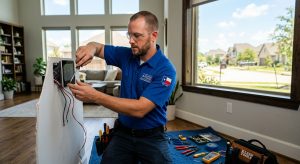
Aluminum wiring replacement Beverly Hills homeowners look into usually starts with something small: a warm switch plate, a flickering light that nobody can explain, or an electrician mentioning it in passing during an unrelated service call. What most people do not realize until they hear it directly is that this is not a cosmetic issue or a minor inconvenience. It is a documented fire hazard with a known cause, a known era, and two accepted professional fixes, which makes it one of the more solvable problems an older Beverly Hills home can have, provided it gets identified and addressed rather than ignored.
Beverly Hills has a large stock of homes built or expanded during the exact window when aluminum branch circuit wiring was standard practice nationally, roughly 1965 through 1973, when copper prices spiked and builders across the country substituted aluminum for cost reasons. Estates in the Flats, mid-century properties in Trousdale, and older homes throughout the hillside neighborhoods were all built or renovated during a period when this material was common and, at the time, believed to be a safe substitute for copper. Decades of field data since then have told a different story.
What the CPSC found, and why it still matters decades later
The U.S. Consumer Product Safety Commission’s own research on aluminum branch circuit wiring found that homes wired with the older generation of aluminum wire manufactured before 1972 are 55 times more likely to have a connection reach fire hazard conditions than a home wired with copper. That is not a small elevated risk. It is a finding significant enough that the CPSC pursued formal safety recommendations for the product, and it is why aluminum wiring remains a standard disclosure item in real estate transactions and home inspections nationwide, including in Beverly Hills.
The danger is not the aluminum conductor itself sitting inside a wall doing nothing. It is what happens at connection points, at outlets, switches, and junction boxes, where aluminum’s higher rate of thermal expansion and contraction compared to copper gradually loosens the connection over years of heating and cooling cycles. Aluminum also oxidizes when exposed to air, and that oxide layer increases electrical resistance at exactly the point where a loose connection is already generating heat. The combination compounds over time: a connection that tests fine today can be measurably hotter in five years, and hotter still after ten, often with no visible warning until a switch plate feels warm to the touch or a breaker starts tripping for no clear reason.
How to tell if your Beverly Hills home has it
The single most reliable indicator is the age of the home or the age of any addition, remodel, or rewired circuit. Homes built before 1965 are unlikely to have aluminum branch circuit wiring at all, while anything built, expanded, or rewired between 1965 and the mid-1970s has a meaningful chance of it, particularly in the original circuits that were never touched during a later renovation. A partial remodel does not necessarily solve the problem, since it is common for a kitchen or primary suite to be rewired in copper while the original bedroom and hallway circuits from the 1960s or 1970s remain untouched.
- Check the home’s original construction date and the date of any major electrical work
- Look at wire jacket markings at the panel or an accessible junction box; aluminum wire is typically marked “AL” or “ALUMINUM”
- Watch for warm or discolored switch and outlet cover plates, especially on circuits that have not been touched since the home was built
- Note any flickering lights, outlets that stop working intermittently, or a persistent smell of warm plastic near a switch or receptacle
- Ask directly during any home inspection, since not every inspector calls it out unprompted
None of these signs are something a homeowner should investigate by removing cover plates or handling wiring directly. Aluminum wiring evaluation and any connection work should go to a licensed electrician experienced specifically with aluminum wiring repair, since not every electrician has the training or the approved connector systems this work requires.
The two CPSC-accepted repair methods
There are two widely accepted paths to resolving aluminum wiring at a connection point, and a full home rewire is not the only one, which is good news given how disruptive and costly a complete rewire can be in an older Beverly Hills estate with finished plaster walls and detailed millwork.
Full rewire with copper
Replacing all aluminum branch circuit wiring with copper is the most complete and permanent solution, and it is often the right call when a home is already undergoing a substantial renovation with walls open regardless. For a home not otherwise being remodeled, a full rewire is significant, invasive work, and for a historically detailed Beverly Hills property it requires an electrician comfortable working carefully around original plaster, millwork, and architectural finishes rather than treating the job like new construction.
Copper pigtailing at connection points
The more targeted and far less invasive approach addresses the actual failure point rather than the wire itself. A licensed electrician splices a short length of copper wire onto the end of each aluminum conductor at every outlet, switch, and junction box using an approved connection method, commonly a COPALUM crimp system or an approved twist-on connector rated specifically for aluminum-to-copper splices, sometimes paired with an antioxidant compound to further reduce oxidation at the joint. This “pigtail” gives you a copper connection point at every device while leaving the aluminum wire itself in place inside the walls, since the wire is not the hazard. The connection is.
CO/ALR-rated switches and receptacles, devices specifically listed for direct connection to aluminum wire, are a supplementary option in some situations, but pigtailing with an approved connector remains the more broadly recommended approach across the industry, particularly for older homes with a mix of device types and ages.
“People hear aluminum wiring and assume the whole house needs to come apart. Most of the time it does not. What actually needs attention is every connection point, the outlets and switches, and that can usually be done without touching the walls at all.”
– Dikran, Blue Moon Electrical
Why this comes up so often during Beverly Hills real estate transactions
Aluminum wiring is a standard disclosure item in California real estate transactions, and it routinely surfaces during pre-sale inspections of Beverly Hills homes from the relevant construction era. Buyers, their inspectors, and increasingly their insurance carriers ask about it directly, and an undocumented or unaddressed aluminum wiring condition can complicate financing, insurance approval, or negotiations during escrow. A seller who has already had the connections evaluated and pigtailed, with documentation from a licensed electrician, is in a materially stronger position than one who has not, particularly for a property in the price range typical of Beverly Hills.
The reverse is also true for buyers. If you are purchasing an older Beverly Hills property built or renovated in that mid-1960s to mid-1970s window, asking specifically about aluminum wiring, and requesting documentation of any remediation already performed, is a reasonable and increasingly common part of due diligence. It is a far less expensive question to ask before closing than to discover unexpectedly afterward.
What this typically costs
Copper pigtailing priced per connection point is generally far less expensive than a full rewire, since the labor is concentrated at each outlet, switch, and junction box rather than involving new wire runs through walls and ceilings. The total cost for a home depends directly on how many devices need remediation, which is why an accurate quote requires an electrician to actually count the affected connections rather than estimate from square footage alone. A full copper rewire costs meaningfully more because it involves new wire runs throughout the home, more labor hours, and typically some wall and ceiling patching afterward, even when an electrician works carefully to minimize the footprint of the work.
For homeowners weighing the two options purely on cost, it is worth remembering that pigtailing is not a temporary or lesser fix. It is a CPSC-recognized permanent remediation when performed correctly with an approved connector, not a stopgap that buys time before an eventual full rewire. Many homes that were pigtailed decades ago are still functioning safely on that repair today, provided the connections were done properly by an experienced electrician in the first place.
Insurance considerations specific to older Beverly Hills properties
Some homeowners insurance carriers ask directly about aluminum wiring on an application or renewal for a property built in the relevant era, and a small number will decline to write a policy, apply a surcharge, or require documented remediation before binding coverage. This varies by carrier and is not universal, but it is common enough that Beverly Hills homeowners with an aluminum-wired property should not be surprised if the topic comes up during an insurance renewal, particularly as more carriers tighten underwriting standards for older homes across Southern California generally.
Having documentation from a licensed electrician showing that connections have been remediated, whether through pigtailing or a full rewire, is typically enough to satisfy an insurer’s concern. This is another reason proactive remediation, rather than waiting for a problem to force the issue, tends to serve homeowners well, both for safety and for the practical matter of keeping insurance coverage straightforward.
Renovations and remodels are a natural point to address it
If you are already planning a kitchen remodel, a primary suite renovation, or any project in a Trousdale, hillside, or Flats home that opens up walls in part of the house, that is a natural opportunity to have an electrician evaluate and remediate any aluminum wiring circuits in the affected area as part of the same project. Doing it alongside planned construction, rather than as a standalone job later, generally reduces total disruption and can be more cost-effective since the walls are already open for other reasons.
This does not mean every unrenovated circuit in the home needs to wait for its own future remodel before being addressed. Pigtailing specifically exists because it does not require opening walls, which means aluminum circuits in untouched parts of the house can be remediated on their own timeline, independent of any larger renovation plans.
Permits and working with a licensed electrician
Any aluminum wiring remediation involving new connections, whether pigtailing or a full rewire, should go through the City of Beverly Hills Building & Safety Division, which issues electrical permits and requires a corresponding inspection for this kind of work. This matters for the same reason permitted work matters for any electrical project: it creates a documented, inspected record that protects you during a future sale, and it ensures the work was actually done to the connector manufacturer’s listing requirements rather than as an informal shortcut.
It is worth confirming that whichever electrician performs the work holds an active C-10 electrical contractor license, verifiable through the California Contractors State License Board, and specifically has experience with aluminum wiring remediation rather than general electrical work alone. Not every licensed electrician has hands-on experience with COPALUM crimping or aluminum-rated connectors, and this is a case where that specific experience meaningfully affects the quality and reliability of the repair.
What to do if you suspect aluminum wiring in your home
If your Beverly Hills home was built, expanded, or last rewired sometime between 1965 and the mid-1970s, and you have noticed a warm switch plate, a flickering light, or simply have never had the wiring evaluated, the reasonable next step is a professional assessment rather than waiting for a more obvious warning sign. This is not a problem that resolves itself, and it is also not, in most cases, a problem that requires the disruption of a full home rewire to fix properly. A licensed electrician can walk the home, identify which circuits are aluminum, and recommend whether pigtailing at the connections or a broader rewire makes more sense given your renovation plans and budget.
Our Beverly Hills electricians handle both aluminum wiring replacement and full whole-home rewiring, and can advise on which path fits your specific home after an in-person evaluation. If your project also involves updating a kitchen or primary bath where plumbing fixtures are being relocated at the same time, a Los Angeles area plumber familiar with older Beverly Hills properties can help coordinate the trades so walls are only opened once.