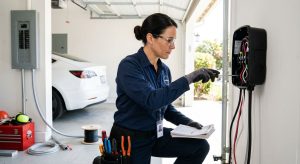
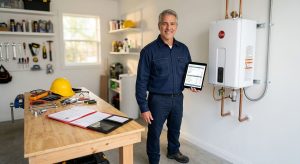
Subpanel installation Torrance homeowners are asking about more often is rarely about a house that has an electrical problem. It is usually about a garage that has outgrown a single circuit. Torrance’s postwar tracts, from Old Torrance to the streets around Anza Elementary, were built with detached and attached garages meant for parking and not much else, and a lot of those garages are now home offices, workshops, gyms, or the future spot for an EV charger.
A subpanel is a smaller electrical panel fed from your home’s main panel that gives a specific area, most often a garage, an addition, or a workshop, its own dedicated set of breakers. Instead of running one overloaded extension cord to a space heater and a shop vac at the same time, a subpanel lets that space carry real, separated electrical load safely.
How a Subpanel Is Different From a Full Panel Upgrade
These two projects get confused often, and they solve different problems. A main panel upgrade increases your entire home’s total electrical capacity, usually because the existing service (say, 100 amps) can no longer support the home’s overall demand. A subpanel does not increase your home’s total capacity. It takes a portion of the capacity your main panel already has and distributes it to a specific area with its own breakers.
If your main panel is modern, in good working condition, and simply has no open slots left for new circuits, a subpanel is usually the more efficient and less expensive path. If your main panel is old, undersized, or already fully loaded by your house, a subpanel alone will not solve the underlying capacity problem, and a panel upgrade needs to happen first.
Why Torrance Garages Are a Natural Fit
Torrance’s housing stock leans heavily on detached and attached garages built in an era when a garage meant a car, a lawnmower, and maybe a single overhead light. Running a single 15 or 20 amp circuit out to that space made sense in 1962. It does not make sense once that garage is doing double duty as a workshop with power tools, a home gym, or a spot to charge an EV overnight.
A subpanel solves the fundamental wiring problem of a detached garage: getting power to a space that sits away from the house without daisy-chaining every new device onto one overloaded circuit. Instead of a single line feeding everything, a subpanel installed inside the garage lets an electrician run individual, correctly sized circuits for lighting, outlets, a dedicated 240-volt tool circuit, and an EV charger, each protected by its own breaker.
What a Subpanel Installation Actually Involves
For a detached garage, the job starts with a feeder run from the main panel to the new subpanel location. This is a four-wire feeder (two hot conductors, a neutral, and a separate equipment ground) run either overhead or, more commonly in Torrance’s flat, tract-style lots, buried underground in conduit. Local permitting typically calls for a minimum trench depth, and the neutral and ground must stay isolated at the subpanel, unlike the combined neutral-ground bonding allowed at a main panel.
Sizing matters here. A garage running basic lighting and a couple of outlets can often get by with a 60 amp subpanel, while a workshop with power tools, a window air conditioner, or a future EV charger is usually better served by 100 amps, which leaves headroom for whatever gets added next rather than requiring a second upgrade in a few years.
What a subpanel is a good fit for in a Torrance garage
- A main panel with no open breaker slots left
- A detached garage, workshop, or ADU that needs its own circuits
- Power tools, a compressor, or a window air conditioner
- An EV charger installed away from the main panel
- Future flexibility to add circuits without another major job
What a Subpanel Installation Typically Costs
Pricing for a subpanel installation depends heavily on the feeder run distance, whether the run is trenched underground or overhead, and the amperage of the subpanel itself. A detached garage that sits a longer distance from the main panel requires more trenching and feeder wire than an attached garage sharing a wall with the house, and that difference shows up directly in the final cost.
As a general point of reference, published cost guides for detached garage subpanels commonly cite a range in the range of roughly one to three thousand dollars installed for a straightforward run, with the final number shaped by trenching length, soil conditions, and subpanel amperage. Costs move higher when a project also includes new circuits inside the garage itself, like dedicated 240 volt outlets for power tools or an EV charger. A licensed electrician can give you an accurate number once they have seen the actual distance and conditions on your property, rather than relying on a generic online estimate that assumes ideal conditions.
What to Expect During the Installation Process
The project typically starts with the electrician confirming your main panel has adequate available capacity to feed the new subpanel, since a subpanel installation depends entirely on that capacity already existing. From there, the trenching work begins for a detached garage, following the city’s required minimum depth for buried conductors, before the four-wire feeder is run and connected at both ends.
Once the physical wiring is complete, the subpanel is mounted, labeled, and the individual circuits inside the garage are wired to it. The final step is scheduling the City of Torrance inspection, and the subpanel cannot be used for permanent power until that inspection passes. A licensed electrician manages this entire sequence, including scheduling the inspection, so the process should feel coordinated rather than like several disconnected steps.
Permits and Inspection in Torrance
Every subpanel installation in the City of Torrance requires a permit through the city’s Building and Safety Division, and the completed work must pass inspection before it is energized for permanent use. This is not a step worth skipping. An unpermitted subpanel can complicate a future home sale, and more importantly, inspection catches errors, like an improperly bonded neutral, before they become a hazard.
A licensed electrician handles the permit application and schedules the inspection as part of the job, so this should not add friction to the process from a homeowner’s side. It does mean a subpanel installation typically takes more than a single afternoon, since the trenching, wiring, and inspection steps each take real time to do correctly.
Sizing a Subpanel for an EV Charger
EV charger installation is one of the most common reasons Torrance homeowners are looking at a garage subpanel today. A Level 2 home charger typically draws a meaningful, continuous load, and running that circuit directly from an already-full main panel is often not possible without either freeing up space or adding capacity elsewhere.
A garage subpanel sized with the EV charger in mind from the start avoids a second project down the line. This is also where the National Electrical Code’s 2026 update matters: EV charging receptacles are now required to be specifically listed and rated for that use, and code adoption details vary by local jurisdiction, so it is worth confirming current requirements with a licensed electrician before the receptacle is specified, not after it is installed.
| Subpanel size | Typical use |
|---|---|
| 60 amps | Lighting, a few outlets, light-duty use |
| 100 amps | Power tools, window A/C, single EV charger |
| 100+ amps / dual EV ready | Workshop plus EV charger, ADU-adjacent use |
A licensed electrician will run a load calculation based on your actual planned use rather than guessing, since undersizing a subpanel means facing the same capacity problem again in a few years.
Choosing the Right Location for a Detached Garage Subpanel
Where the subpanel is physically mounted inside the garage matters more than homeowners often expect. It needs clear working space in front of it for code compliance and future access, should sit away from areas prone to moisture if the garage door is left open during rain, and ideally lands near where the highest-demand circuits, like an EV charger or a dedicated tool outlet, will actually be used, since shorter branch circuit runs from the subpanel to those loads are more efficient than routing everything across the garage.
A licensed electrician will walk the space with you before finalizing the location, since a subpanel placed as an afterthought in a leftover corner can end up harder to access for future circuit additions than one planned around your actual garage layout from the start.
“The number one thing I tell homeowners is to size for what you’ll want in five years, not just what you need today. A subpanel done right the first time means you’re not digging up the same trench again once you decide to add an EV charger or a second tool circuit.”
– Sako, Blue Moon Electrical
Detached Versus Attached Garage Considerations
A detached garage, common throughout Torrance’s older tracts, requires an underground or overhead feeder run crossing open yard space, which adds both trenching cost and, in some cases, landscaping considerations if the run crosses planted areas or a driveway. Homeowners planning other yard work, like a patio or landscaping project, often find it worth coordinating the timing so the trenching happens once rather than disturbing the same area twice.
An attached garage sharing a wall with the main living space is typically a more straightforward installation, since the feeder run is often shorter and may not require any trenching at all if the subpanel can be mounted on the shared wall near the main panel. This tends to make attached garage subpanels somewhat less expensive and faster to complete, though the actual savings depend on your home’s specific layout.
Common Mistakes That Cause Problems Later
The most frequent issue electricians find in older or DIY-installed subpanels is a neutral and ground that were never properly separated, a step that is required at every subpanel but not at a main panel. This single mistake can defeat ground fault protection throughout the circuit and is exactly the kind of thing a permit inspection is designed to catch.
Undersizing the feeder wire relative to the subpanel’s breaker rating is another common issue, particularly in older detached garage wiring that was upgraded piecemeal over the years rather than planned from the start. A licensed electrician sizes the feeder to the subpanel’s full rated capacity, not just to today’s planned load, which is part of why a professional installation costs more than a weekend DIY project but avoids a much larger repair bill later.
Subpanels for ADU and Home Office Conversions
Torrance’s detached garages are also a common target for ADU conversions and home office builds, and a subpanel is frequently the right electrical foundation for that project regardless of whether the conversion happens right away. Wiring a subpanel with enough capacity for a future ADU, even if the space is used as a simple workshop for now, avoids having to redo the electrical work once the conversion plans firm up.
This is worth discussing with your electrician even if an ADU is only a possibility rather than a firm plan, since the cost difference between sizing a subpanel adequately now versus resizing it later is usually significant. A subpanel installed with future flexibility in mind is one of the more cost-effective decisions a homeowner can make during this kind of project.
Getting the Most Out of a Subpanel Project
If you already know an EV charger, a second workshop tool circuit, or an ADU conversion is somewhere in your future, it is worth discussing that with your electrician before the subpanel goes in, not after. Adding capacity for future circuits during the initial installation is a fraction of the cost of trenching and running a new feeder a second time.
It is also a good moment to have your main panel checked while an electrician is already on site. A subpanel installation depends on your main panel having available capacity to feed it, so confirming that capacity, and addressing anything else the panel needs, as part of the same visit is usually the more efficient path.
Many Torrance homes in the neighborhoods around Walteria and Old Torrance still carry their original main panels from the 1960s, and it is common for an electrician evaluating a subpanel project to find other issues worth flagging at the same time, such as an outdated fuse-style panel or a handful of double-tapped breakers. Addressing everything discovered during that visit, rather than scheduling a separate trip later, generally saves both time and money.
Blue Moon Electrical installs and permits subpanel installations for homeowners throughout our Torrance, CA service area, sized correctly for garages, workshops, and EV chargers from the start. If your project also involves adding a charger, take a look at our EV charger installation service, or if your main panel needs a closer look first, our electrical panel upgrade team can evaluate your available capacity.