Whole house surge protection Torrance homeowners are asking about more often has less to do with lightning, which is genuinely rare in coastal Southern California, and much more to do with the everyday electrical events that actually cause most surge damage: utility grid switching, power restoration after an outage, and the growing number of large appliances and motors cycling on and off inside the home itself.
The average Torrance household today has far more at stake in a surge than it did even ten years ago. Rooftop solar inverters, EV chargers, smart thermostats, home networking equipment, and multiple TVs and computers are all sensitive electronics sitting on the same circuits that used to carry a lot less. A single bad surge event can damage several of these at once, turning what should have been a minor grid hiccup into a genuinely expensive afternoon.
What Actually Causes Most Power Surges
Contrary to the common assumption, most home power surges are not caused by lightning. According to major home insurers, the more frequent causes are utility-side events like grid switching, substation maintenance and repairs, and the restoration of power after an outage, along with internal causes like large appliances and motors turning on and off, which is documented in State Farm’s overview of common power surge causes.
Southern California Edison, which serves Torrance, routinely performs grid maintenance, switching operations, and outage restoration, all of which can send a brief but damaging voltage spike into a home’s electrical system. These events happen quickly, often lasting a fraction of a second, which is exactly why many homeowners never connect a damaged appliance to a specific event. It just seems to stop working.
Internal surges add to the picture as well. Large appliances and motors inside your own home, air conditioning compressors, refrigerators, and well pumps among them, create smaller but more frequent switching surges every time they cycle on and off. These internal events do not usually cause the dramatic, all-at-once damage of a major grid event, but they add cumulative wear to sensitive electronic components over months and years of normal use.
What Gets Damaged, and How Often
Independent claims data backs up how often this actually happens and what it hits. In an analysis of electronics assessed with confirmed surge damage, roughly half were consumer electronics like TVs and computers, and close to a third were household appliances, according to claims data published by Alpine Intel’s StrikeCheck division. That means the devices most Torrance households rely on daily, not rare specialty equipment, are exactly what is most at risk.
Modern homes are also more exposed than older ones, not less. A rooftop solar inverter, an EV charger’s onboard electronics, a smart electrical panel, and networked security cameras are all sensitive, circuit-board-based equipment that a decade-old home simply did not have. Each one is another device a single surge event can take out.
How Whole House Surge Protection Actually Works
A whole house surge protection device is installed directly at your main electrical panel, where it monitors the incoming power for voltage spikes. When it detects a surge, it diverts the excess voltage safely to ground before it reaches your home’s branch circuits and the devices plugged into them, rather than waiting for damage to happen and then relying on individual plug-in strips to catch it.
This is meaningfully different from the surge protector power strips most people already own. A panel-level device protects your entire electrical system, including hardwired equipment like your HVAC system, water heater, and any built-in appliances that a plug-in strip cannot reach at all. Plug-in surge protectors still have a role for sensitive individual electronics, but they work best as a second layer behind whole-home protection, not as a replacement for it.
What whole house surge protection covers that a power strip does not
- HVAC systems and built-in appliances with no accessible outlet
- Your electrical panel itself and hardwired circuits
- A rooftop solar inverter or EV charging equipment
- Every outlet in the home at once, not just the ones protected by a strip
- Smart home and security systems wired directly into circuits
What Whole House Surge Protection Typically Costs
A whole house surge protection device is one of the more cost-effective electrical upgrades available, especially relative to the value of what it protects. Pricing depends on the device’s rating and whether any panel work is needed alongside the installation, but as a general point of comparison, the cost of the device and installation is typically far less than the cost of replacing even one damaged major appliance or a solar inverter, let alone several devices at once from a single surge event.
A licensed electrician can give you an accurate quote once they have looked at your specific panel, since panel age and condition can affect installation complexity. For most homes, this is a same-day project with a straightforward, predictable cost, which is part of why it is one of the more commonly recommended upgrades alongside other electrical work.
What to Expect During Installation
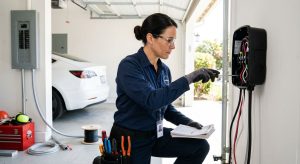
The installation itself connects the surge protection device directly at your main panel, tapping into the incoming power feed so it can monitor and respond to voltage spikes before they reach your home’s branch circuits. This does not require rewiring throughout the house, since the device works at the single point where power enters your electrical system.
Once installed, the device requires no ongoing maintenance from the homeowner. Most models include a simple indicator light showing the unit is functioning properly, and a licensed electrician can check that indicator as part of any future electrical service visit, similar to how a smoke detector gets checked during routine maintenance.
Torrance’s Growing Exposure to Grid Events
Southern California’s utility grid has faced increasing operational complexity in recent years, from more frequent maintenance switching to the broader industry shift toward proactive power management during high-risk weather periods. None of this is unique to Torrance, but it does mean the frequency of grid-originated switching events affecting Southern California homes has not been trending downward, even as the region works to modernize its infrastructure.
At the same time, the value of equipment sitting behind a typical Torrance home’s electrical panel has grown considerably. A decade ago, a home’s most valuable electronics might have been a television and a computer. Today, that same home is more likely to include a rooftop solar system, a home battery, an EV charger, a smart thermostat, networked security cameras, and multiple connected devices throughout the house, all exposed to the same grid events as before, but with more collectively at stake if a surge gets through.
Why This Matters More With Solar and EV Adoption
Torrance has seen steady growth in rooftop solar installations and EV ownership, and both add genuinely valuable, surge-sensitive equipment to a home’s electrical system. A solar inverter is a significant investment, and its internal electronics are exactly the kind of sensitive component that a grid-switching surge can damage. The same is true of the electronics inside a Level 2 EV charger.
If you already have solar, an EV charger, or plans to add either, it is worth having the surge protection conversation at the same time as that project rather than treating it as a separate, optional add-on. Protecting the investment you are already making in newer electrical equipment is a natural pairing with the installation itself.
Homes With Older Panels Face Added Risk
Older electrical panels, common throughout Torrance’s 1950s and 1960s tracts, were never designed with today’s mix of sensitive electronics in mind, and some lack the grounding infrastructure that modern surge protection devices rely on to work most effectively. If your home has an older panel, a surge protection installation is a good opportunity to have that panel evaluated at the same time, since the surge device’s effectiveness depends partly on the quality of the grounding system it connects through.
This is also relevant if your home has never had its grounding system checked, since a compromised or inadequate ground can reduce the effectiveness of surge protection even when the device itself is properly installed. A licensed electrician can verify your grounding system as part of the same visit, which is a detail worth catching before, rather than after, a surge event.
Insurance and Surge Damage: What Homeowners Should Know
Whether a surge-damaged item is covered by your homeowners insurance often depends on documenting the cause, and insurers frequently distinguish between an externally caused surge, like a utility grid event, and one caused by your home’s own wiring or an overloaded circuit. Reducing the frequency and severity of surges reaching your home’s electronics in the first place is the more reliable protection, regardless of how a specific claim might be handled later.
There is also a practical claims-history angle worth knowing. Filing repeated surge damage claims over the years can affect your premium or claims history, so preventing the damage in the first place is generally the better long-term strategy compared to relying on insurance to replace damaged electronics after the fact.
| Protection layer | What it protects |
|---|---|
| Whole house device (at panel) | Entire electrical system, HVAC, hardwired equipment |
| Plug-in surge strips | Individual sensitive electronics, as a second layer |
“Most homeowners call us after a surge already damaged something, usually a TV, a garage door opener, or an HVAC control board. A panel-level device is inexpensive compared to replacing even one of those, and it protects everything at once instead of one outlet at a time.”
– Steve, Blue Moon Electrical
Installing Whole House Surge Protection
A whole house surge protection device is installed by a licensed electrician directly at your main panel, connecting to your electrical system in a way that monitors all incoming power rather than a single circuit. Installation is typically a same-day job for most Torrance homes and does not require any rewiring beyond the panel connection itself.
This is also a good time to have your panel checked more broadly, since a surge protection device is only as effective as the panel and grounding system it is installed on. If your panel is older or shows signs of other issues, addressing those at the same time is more efficient than a separate visit later.
Homeowners sometimes ask whether a surge protection device needs to be replaced after it absorbs a major surge event. Most modern devices include an indicator that shows when the internal protection component has been depleted and needs replacement, which is a quick, inexpensive swap compared to the cost of the damage the device likely prevented. Checking that indicator periodically, or having it checked during any other electrical service visit, is a simple habit that keeps the protection active over the long run.
A Straightforward Way to Protect a Growing Investment
As more Torrance homes add solar, EV chargers, smart home systems, and simply more connected electronics than a decade ago, the value sitting behind a home’s electrical panel has grown substantially. Whole house surge protection is a relatively small, one-time investment that protects all of it at once, rather than hoping individual devices survive the next grid switching event or outage restoration.
It is also a straightforward upgrade to pair with almost any other electrical project already planned for your home. Homeowners scheduling a panel upgrade, an EV charger installation, or a broader electrical safety inspection often find it makes sense to add surge protection at the same visit, since the incremental cost of doing it alongside other panel work is typically lower than scheduling it as a completely separate project later.
Blue Moon Electrical installs whole house surge protector systems for homeowners throughout our Torrance, CA service area. If you are adding solar or an EV charger and want to protect that investment from day one, ask about pairing surge protection with your EV charging installation, or schedule our electrical safety inspection service if you want your panel and grounding checked at the same time.
A relatively small, one-time upgrade at the panel is a reasonable trade-off against the cost and inconvenience of replacing damaged electronics after the fact, and it is one of the more straightforward ways to protect everything your home’s electrical system now supports, all at once.